
The language used is clear and direct: Individuals residing in the areas of Maui that have been ravaged by fires should refrain from attempting to filter their own drinking water, as there is no viable method to ensure its safety. This statement was made by Maui County on their Instagram account this week.
This message reached Anne Rillero and her spouse, Arnie, residing in Kula, as they sat down to yet another frozen pizza meal. The couple considers themselves extremely fortunate to have survived the fires that swiftly swept across Maui recently, erasing most of Lahaina from the landscape. The confirmed fatality count was elevated to 114 individuals on Friday.
Upon receiving a notification from a local community organization advising them not to consume their water and to ventilate their home even when running the tap, the couple opted to eat using disposable plates to prevent exposure – avoiding washing dishes altogether.
Rillero, a retired specialist in conservation communication with 22 years of island residency, expressed her concern, stating, “It’s distressing that the contamination could persist in the water system for a considerable time.”
Various filtration methods like Brita filters, appliance-linked devices, and comprehensive home-wide systems are unlikely to adequately address the “severe contamination” that can occur following a fire.
“While they might eliminate a portion of the contaminants, the levels that could be acutely and immediately harmful will manage to pass through,” explained Andrew Whelton, an expert in water contamination after urban wildfires and a researcher from Purdue University.
The wildfires on Maui inflicted substantial damage to numerous drinking water pipelines, leading to a drop in pressure that facilitates the intrusion of toxic chemicals, metals, and bacteria into the water distribution lines.
“Even when those pipelines are subterranean, they can draw in contaminated or unclean water from the external environment,” elucidated David Cwiertny, a professor of civil and environmental engineering at the University of Iowa.
In the regions of Lahaina and Upper Kula, hundreds of families might find themselves in the same predicament as the Rilleros. Residents have been advised to minimize contact with the county’s water supply, including refraining from taking showers. Aerial imagery and damage evaluations from Vexcel Data reveal that in Lahaina alone, 460 structures seemingly remain intact amid the devastation caused by the fires. These are the places where people are now returning to.
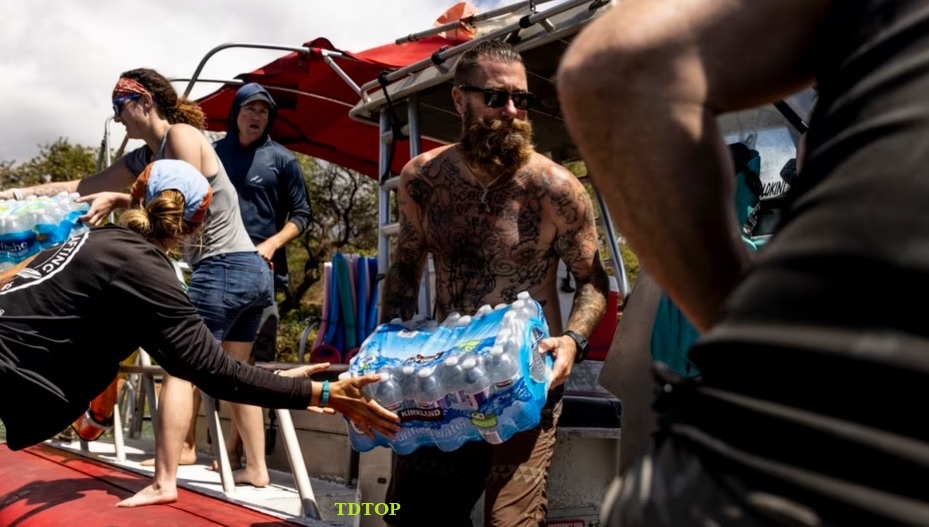
At present, the county has instructed residents to use bottled water for all their requirements or to fill containers at designated water tankers called water buffalos, which have been stationed close to the affected areas.
The environmental health division of the state health department directed Maui County, responsible for operating water delivery systems for the majority of residents, to conduct tests for 23 different chemicals. These are the substances for which the federal government has established limits pertaining to drinking water.”