
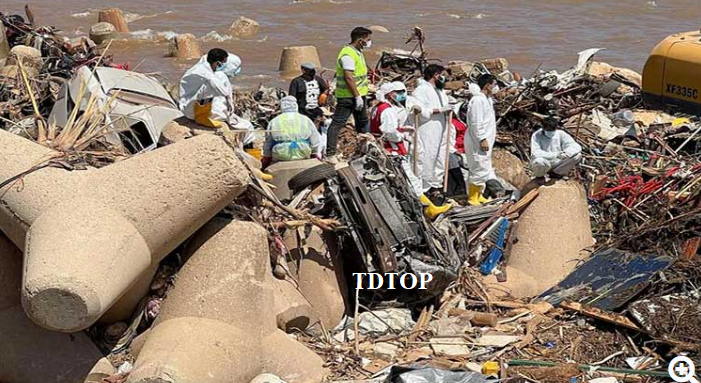
DERNA (Reuters) – The people of Derna, a city in eastern Libya, are grappling with difficult decisions in the wake of devastating floods that struck their region a week ago. The disaster, caused by the collapse of two dams on September 10 during a powerful storm, has left residents facing a heartbreaking dilemma: whether to remain in their homes, risking infection, or brave the perilous journey through areas where torrential floods have displaced landmines.
The catastrophe has been catastrophic, with thousands of lives lost as residential blocks along a usually dry riverbed were washed away while people slept. Many of the victims’ bodies have been carried out to sea.
The official death toll, as reported by the United Nations Office for the Coordination of Humanitarian Affairs (OCHA), stands at a staggering 11,300, according to the Libyan Red Crescent. However, a spokesperson for the Libyan Red Crescent has cast doubts on this figure, emphasizing that the situation remains fluid and that the Red Crescent is not responsible for confirming such statistics.
Eri Kaneko, a spokesperson for OCHA, has noted the challenges in obtaining precise casualty figures, given the ongoing search for bodies and survivors. The World Health Organization (WHO) has, thus far, confirmed 3,922 deaths, while the health minister for the Libyan eastern government has reported 3,283 casualties.
The aftermath of the disaster reveals scenes of desolation, with streets cleared of rubble and twisted metal remnants, including parts of destroyed vehicles. The once-thriving districts of Derna, estimated to have had a population of at least 120,000, have been obliterated or buried under mudslides. Reports indicate that at least 891 buildings have been reduced to ruins, and the mayor of Derna has suggested that the death toll may rise as high as 20,000.
Many survivors are left in a state of uncertainty and despair, struggling to determine their next steps. With rumors circulating and a lack of essential resources like water, the affected residents are torn between leaving the city or staying put in the midst of the devastation.
Homeless survivors have resorted to makeshift shelters in schools or have sought refuge in the homes of relatives and friends. The flooding has also triggered the displacement of landmines and other ordnance left over from previous conflicts, adding to the dangers faced by the displaced population as they seek safety.
Aid organizations have mobilized to provide emergency assistance, but international officials emphasize the need for more substantial support. Despite the challenges, communities from various regions have rallied to provide aid, offering a glimmer of hope amidst the overwhelming devastation.
As the people of Derna cling to hope, the disaster has prompted some coordination between the internationally-backed administration in western Libya and the rival administration in the east. However, the arduous task of reconstruction ahead is expected to reveal underlying divisions once again in this nation that has struggled to find stability since the 2011 overthrow of Muammar Gaddafi’s regime.