
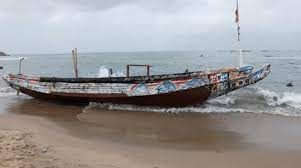
Over 60 individuals are currently feared deceased following the discovery of a migrant-carrying boat near the coastline of Cape Verde in West Africa.
Among the passengers, 38 people, including children, were successfully rescued. Video footage captures their arrival ashore on stretchers and with assistance on the island of Sal.
The boat had been adrift at sea for over a month, and it is believed that the majority of those aboard were from Senegal.
Cape Verde officials are urging global efforts to address migration issues in order to prevent further loss of life.
Initially sighted on Monday, law enforcement informed the AFP news agency that the vessel had been spotted, dispelling earlier assumptions of its sinking.
A wooden boat styled in the pirogue fashion was observed around 320km (200 miles) from Sal by a Spanish fishing vessel, which promptly notified authorities.
Among the survivors are four children, aged between 12 and 16, according to a spokesperson from the International Organization for Migration (IOM).
The journey had commenced on July 10th from the Senegalese fishing village of Fasse Boye, with 101 individuals on board, as indicated by Senegal’s foreign ministry. This information was relayed by survivors.
Moda Samb, an elected representative from the village, conveyed to AFP that nearly all the passengers had roots in the community, and some local families were still awaiting confirmation regarding the fate of their relatives.
Senegal’s foreign ministry is coordinating with Cape Verde authorities for the repatriation of Senegalese nationals.
Passengers also hailed from other countries, including Sierra Leone, and in one instance, Guinea-Bissau.
Health official Jose Moreira on Sal stated that the survivors’ conditions were improving and that they were receiving care, focusing on rehydration and medical tests for ailments such as malaria.
Health Minister Filomena Goncalves emphasized the global nature of migration concerns, calling for international collaboration, discussions, and a comprehensive strategy to prevent further maritime fatalities.
Safa Msehli, a spokesperson for the IOM, noted the scarcity of safe migration routes, attributing the absence of such pathways to the proliferation of smugglers and traffickers orchestrating perilous journeys.